
15 Yard Roll Off Dumpster Rental: Sizes, Costs, Capacity, and Uses
A 15 yard roll off dumpster rental is a practical option for homeowners, contractors, and property managers handling small to medium-sized cleanup projects. It provides space for household junk, renovation debris, old furniture, and other approved waste without requiring a larger container than the project needs.
Choosing the right dumpster involves understanding its dimensions, weight allowance, rental period, and disposal restrictions. Comparing these details before booking can help control costs and prevent unexpected overage fees.
What Is a 15 Yard Roll Off Dumpster?
A 15-yard roll-off dumpster is a large, open-top waste container delivered to a property by a specialized truck. It is placed on a suitable surface and collected when the rental period ends or the container is ready for removal.
The term 15 yard refers to the container’s volume, measured in cubic yards—not its length. A 15-cubic-yard dumpster holds approximately 405 cubic feet of material.
This size can suit projects that generate more waste than a few household garbage bags but do not require a large construction dumpster.
Common applications include:
Garage, attic, and basement cleanouts
Bathroom and small kitchen renovations
Flooring, carpet, and cabinet removal
Yard cleanup and landscaping debris
Moving-related decluttering
Small property cleanouts
Light construction and demolition projects
The best dumpster size depends on both the volume and weight of the waste being disposed of.
15 Yard Dumpster Dimensions and Capacity
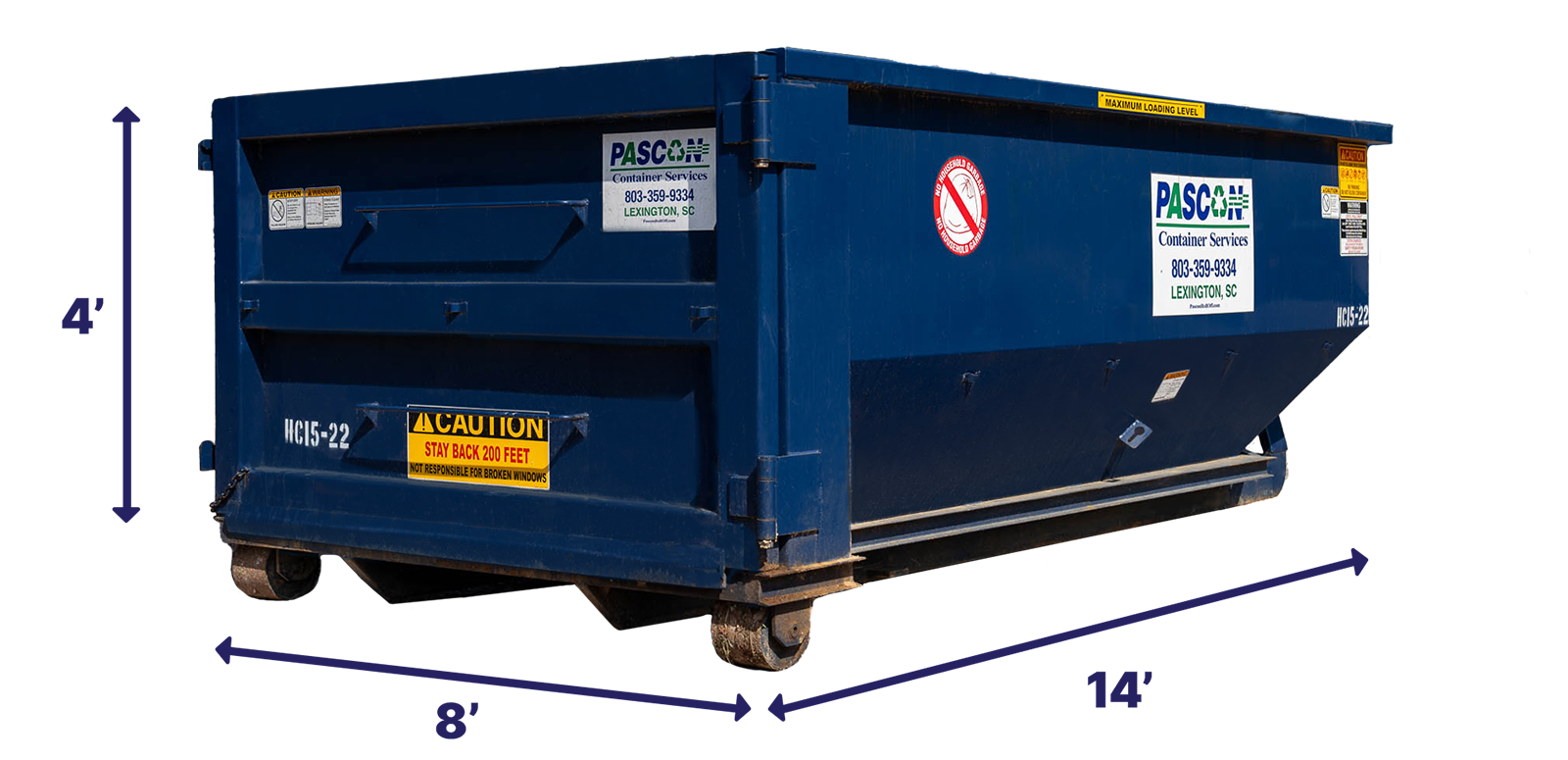
Dimensions vary by rental company and container design. The supplied dumpster image shows an example measuring approximately 14 feet long, 8 feet wide, and 4 feet high.
These measurements provide a useful reference, although customers should confirm the specifications of the actual container being rented.
| Specification | Approximate measurement |
|---|---|
Length | 14 feet |
Width | 8 feet |
Height | 4 feet |
Volume | 15 cubic yards |
Cubic-foot capacity | 405 cubic feet |
Loading style | Open top |
Placement | Driveway, construction site, or approved surface |
The listed dimensions are illustrative rather than universal. Actual usable capacity can differ because of the container’s shape, wall angles, and loading restrictions.
How Much Can a 15 Yard Dumpster Hold?
A 15-yard dumpster can hold a substantial amount of ordinary household junk, renovation waste, and other permitted debris. However, the amount depends on the materials’ shape, density, and how efficiently they fit inside the container.
Bulky items may occupy considerable space even when they are relatively light. Dense materials, including concrete, soil, and roofing shingles, can reach the permitted weight limit before the container is full.
For this reason, rental customers should consider both volume and weight when estimating the required capacity.
Benefits of Renting a 15 Yard Roll Off Dumpster
A 15-yard dumpster offers a balance between usable capacity and manageable placement requirements. It can simplify waste removal by allowing materials to be collected in one container rather than making repeated trips to disposal facilities.
1. Suitable Capacity for Medium-Sized Projects
This dumpster size provides room for debris from several rooms, small remodeling projects, and household cleanouts. Its capacity can help keep work areas organized while reducing interruptions caused by waste removal.
2. Convenient Waste Collection
With a roll-off container, approved debris can be placed in one designated location. Once the project is complete, the rental provider arranges collection and transportation to an appropriate disposal or processing facility.
3. Potential Savings on Waste Removal
For projects with a moderate amount of debris, renting one appropriately sized container may be more convenient than paying for multiple disposal trips. The actual savings depend on the rental price, disposal charges, distance to the disposal facility, and amount of waste generated.
4. Versatility for Different Projects
A 15-yard dumpster can accommodate various nonhazardous materials, depending on the provider’s rules. This flexibility makes it useful for home improvement work, property maintenance, and certain construction cleanup tasks.
How Much Does a 15 Yard Dumpster Rental Cost?
The cost of a 15 yard roll off dumpster rental varies according to location, rental duration, debris type, and the amount of weight included in the quoted price.
There is no single nationwide price that applies to every rental. A provider may offer a flat-rate package, a location-specific quote, or pricing that changes according to disposal requirements.
The following factors can affect the final bill:
Cost factor | How it affects pricing |
|---|---|
| Rental duration | Longer rental periods may involve additional daily or weekly charges. |
| Included weight | Exceeding the agreed weight allowance can result in overage fees. |
| Waste type | Heavy or specially regulated materials may require different disposal arrangements. |
| Delivery and pickup | Transportation may be included or charged separately. |
| Location | Local disposal rates, transport distances, and service availability affect the quote. |
| Permits | Placement on a public street may require an additional permit. |
Rental providers commonly identify excess weight and extended rental periods as potential sources of additional charges. Reviewing the complete quote before booking helps prevent unexpected expenses.
How to Get an Accurate Rental Quote
Before reserving a container, customers should prepare the following information:
The property’s delivery address and preferred placement location
The type and estimated volume of debris
The expected start date and rental duration
Any heavy materials that need disposal
Questions about included tonnage, taxes, and extra fees
It is also worth confirming whether the quote includes delivery, collection, disposal, and the full rental period. Comparing quotes on the same terms makes it easier to identify the best value.
What Can Go in a 15 Yard Dumpster?
The permitted contents depend on the rental provider and local disposal regulations. Many standard rentals accept common household and construction debris.
Typical accepted materials may include:
Household junk and unwanted belongings
Furniture and wooden items
Carpet and flooring materials
Drywall and nonhazardous renovation debris
Wood scraps and certain construction materials
Yard waste, where permitted
Packaging and general cleanup waste
Customers should verify acceptance rules before loading unusual, heavy, or regulated materials.
Items That May Be Prohibited
Some materials require specialized handling or are excluded from standard dumpster rentals.
Examples include:
Paints, solvents, and chemical liquids
Batteries and certain electronic waste
Tires and automotive fluids
Asbestos-containing materials
Medical or other regulated waste
Certain appliances and hazardous products
Restrictions vary between providers and locations. For example, some rental services explicitly exclude tires, batteries, chemicals, and asbestos from their standard containers.
When in doubt, obtain approval from the rental provider before placing a restricted or potentially hazardous item in the dumpster.
How to Choose the Right Dumpster Size
A 15-yard dumpster is not the best choice for every cleanup. Comparing it with smaller and larger containers helps customers avoid paying for unused capacity or ordering a dumpster that is too small.
| Dumpster size | Typical applications |
|---|---|
| 10 yard | Small cleanouts, limited renovation debris, and certain heavy materials |
| 15 yard | Garage cleanouts, bathroom remodeling, and medium-sized cleanup jobs |
| 20 yard | Larger home cleanouts, multiple-room renovations, and substantial debris removal |
| 30 yard | Major remodeling, larger construction projects, and extensive property cleanouts |
These are general guidelines. Actual dimensions, permitted materials, and available sizes differ among rental providers.
When Is a 15 Yard Dumpster the Best Choice?
A 15-yard dumpster is worth considering when the project produces a moderate amount of debris and the available space can accommodate the container.
It may be suitable for removing old flooring from several rooms, clearing a cluttered garage, or disposing of debris from a small renovation.
For projects involving substantial amounts of concrete, soil, roofing shingles, or other dense materials, the weight limit deserves particular attention. A smaller container designed for heavy debris may be more appropriate in some circumstances.
How to Prepare for Dumpster Delivery
Preparing the placement area helps make delivery and collection more efficient.
Choose a Suitable Location
The container should sit on a stable, reasonably level surface with adequate clearance for the delivery truck. Driveways and approved construction-site areas are common options.
Before delivery, customers should:
Remove parked vehicles and other obstructions.
Check for low-hanging branches, overhead wires, and nearby structures.
Confirm that the placement surface can support the loaded container.
Verify access requirements with the rental provider.
Check local permit requirements if street placement is necessary.
Load the Dumpster Properly
Distribute materials evenly throughout the container and keep debris below the marked maximum fill line. Items should not protrude above the top or interfere with safe transportation.
Heavy materials should be handled according to the provider’s loading and weight restrictions.
Frequently Asked Questions
How many cubic feet does a 15-yard dumpster hold?
A 15-yard dumpster holds approximately 405 cubic feet because one cubic yard equals 27 cubic feet.
How long can a 15-yard dumpster be rented?
Rental periods vary by provider and service location. Customers should confirm the included rental duration and the charge for keeping the container longer.
Is a 15-yard dumpster suitable for a home renovation?
Yes, it can suit many small to medium-sized renovation projects, including flooring removal, bathroom remodeling, and certain kitchen updates. The amount and weight of the debris determine whether it provides enough capacity.
Does a 15-yard dumpster rental include delivery and pickup?
Many rental packages include delivery and pickup, but the precise terms depend on the provider. The written quote should identify transportation, disposal, rental duration, and potential additional charges.
Can a 15-yard dumpster be placed on a driveway?
A driveway may be suitable if it provides sufficient clearance and can support the container and its loaded weight. Customers should confirm placement requirements with the rental company before delivery.
Does a 15-yard dumpster have a weight limit?
Yes. The applicable weight allowance depends on the rental agreement and local service conditions. Exceeding that allowance may result in additional fees.
Conclusion
A 15 yard roll off dumpster rental can provide a convenient waste removal solution for garage cleanouts, home improvement projects, and medium-sized property cleanups. Its 15-cubic-yard capacity offers useful space without automatically requiring a larger construction container.
Before renting, customers should compare dimensions, included weight allowances, rental periods, accepted materials, and total pricing. Choosing a dumpster based on both debris volume and weight is the most reliable way to plan an efficient cleanup and avoid unnecessary charges.